Could Boris Johnson Be Julian Assange’s Saving Grace?
Boris Johnson defends leakers in principle and cheers Assange's arrest in practice — one of these has to give.
Following the election of Boris Johnson, there may actually be hope for Julian Assange. Up until this point, Assange’s future looked dismal. But with the election of Boris Johnson as British Prime Minister on Tuesday, the situation changes. Johnson is a proponent of press freedom, which means Assange could truly have a chance at liberty.
Assange’s Situation
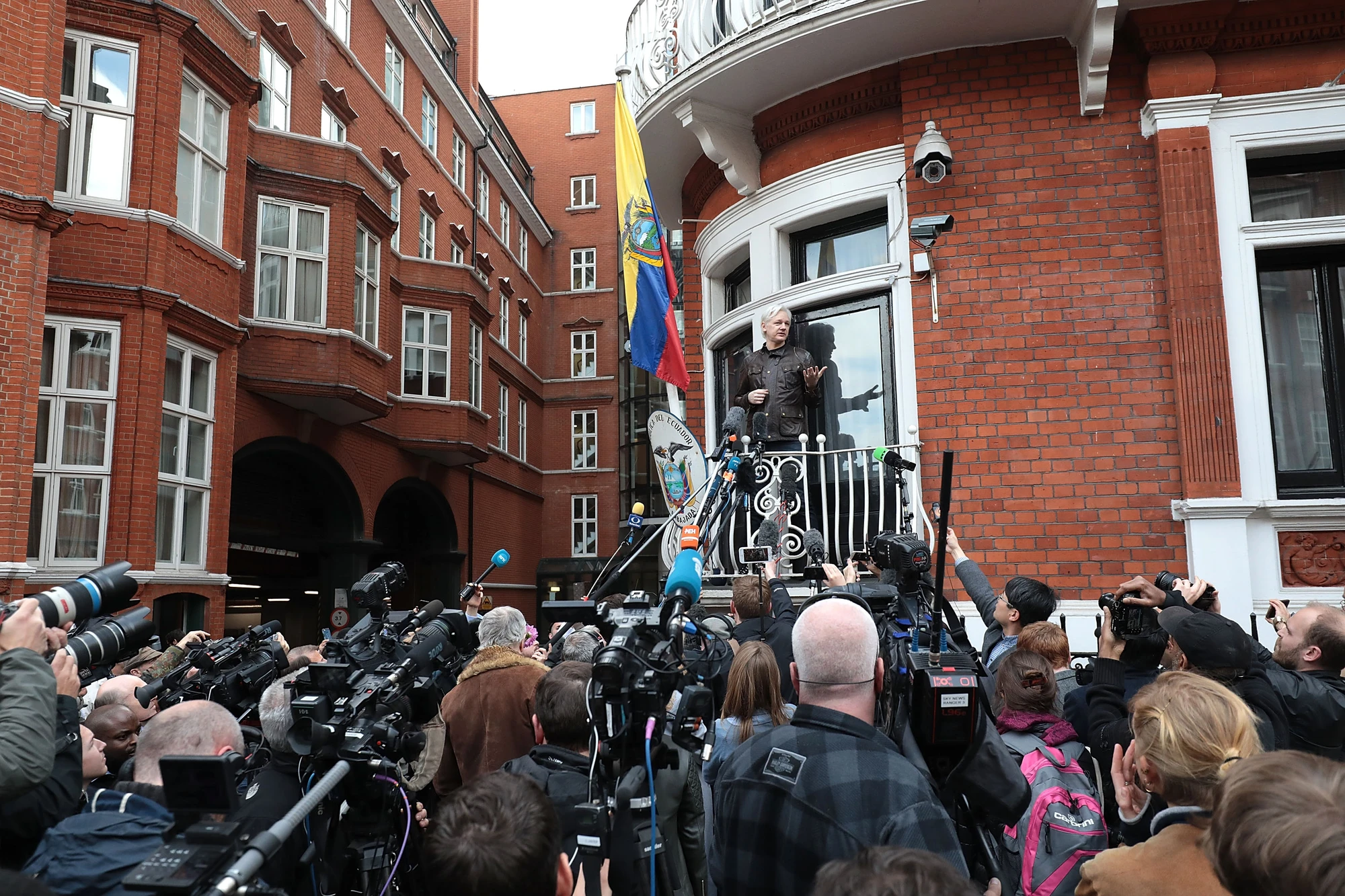
Assange took refuge in the Ecuadorian embassy in 2012 to avoid extradition to Sweden for sexual assault charges. Authorities dropped the case, but following his removal from the Ecuadorian embassies, the case was re-opened. In addition, he is facing extradition to the United States. This would essentially seal his demise because he would probably be charged in a district where it would be impossible to mount a defense.
Will @rcfp and other press be successful in unsealing Assange changes on Tuesday? CIA whistleblower @JohnKiriakou: national security Judge Brinkema "reserves all [such] cases for herself. She made it literally impossible to mount a defence" https://t.co/GvAx1iGHVb
— WikiLeaks (@wikileaks) November 25, 2018
On top of this, a lot of the case may rest on the cooperation of Chelsea Manning. The authorities want Manning to hand over thousands of classified documents. But Manning is staunchly refusing to do so.
For the time being, Assange is in the UK; the United States does not have him yet. The decision to extradite rests on UK courts and will be made in 2020.
Boris Johnson and Freedom of the Press
The situation could change with the new UK prime minister. The Guardian reports that Johnson came out against police targeting leakers and the media.
In my view there is no threat to national security implied in the release of this material. It is embarrassing, but it is not a threat to national security. It is the duty of media organisations to bring new and interesting facts into the public domain. That is what they are there for.
Johnson seems to understand the function of the press in a free society, but the UK is not one. WikiLeaks quickly jumped on the opportunity to steer Johnson in the right direction:
The US government is trying to prosecute Assange for publishing leaked diplomatic cables. UK courts have stated that WikiLeaks is a media organisation.
Will @BorisJohnson agree to extradite Assange even though doing so would enable prosecutions that infringe upon press freedom? pic.twitter.com/acTdHCZr9j
— WikiLeaks (@wikileaks) July 23, 2019
But Johnson’s defense of the press was in reference to leaked diplomatic cables from the former British ambassador to the United States. Johnson stated that prosecution would amount to “an infringement on press freedom and have a chilling effect on public debate”. His attitude on the Assange case is explicitly different, though.
It’s only right that Julian Assange finally faces justice. Credit to @foreignoffice officials who have worked tirelessly to secure this outcome.
— Boris Johnson (@BorisJohnson) April 11, 2019
In principle, he seems to be on the side of Assange. But in practice, he looks to be quite the opposite. Unless someone can get this through his head, it’s unlikely that he will be able to save the whistleblower. The seeds of true press freedom are there for Johnson, though. All that is required is that he applies those tenets to the Assange case.