Ireland Belongs to the Irish
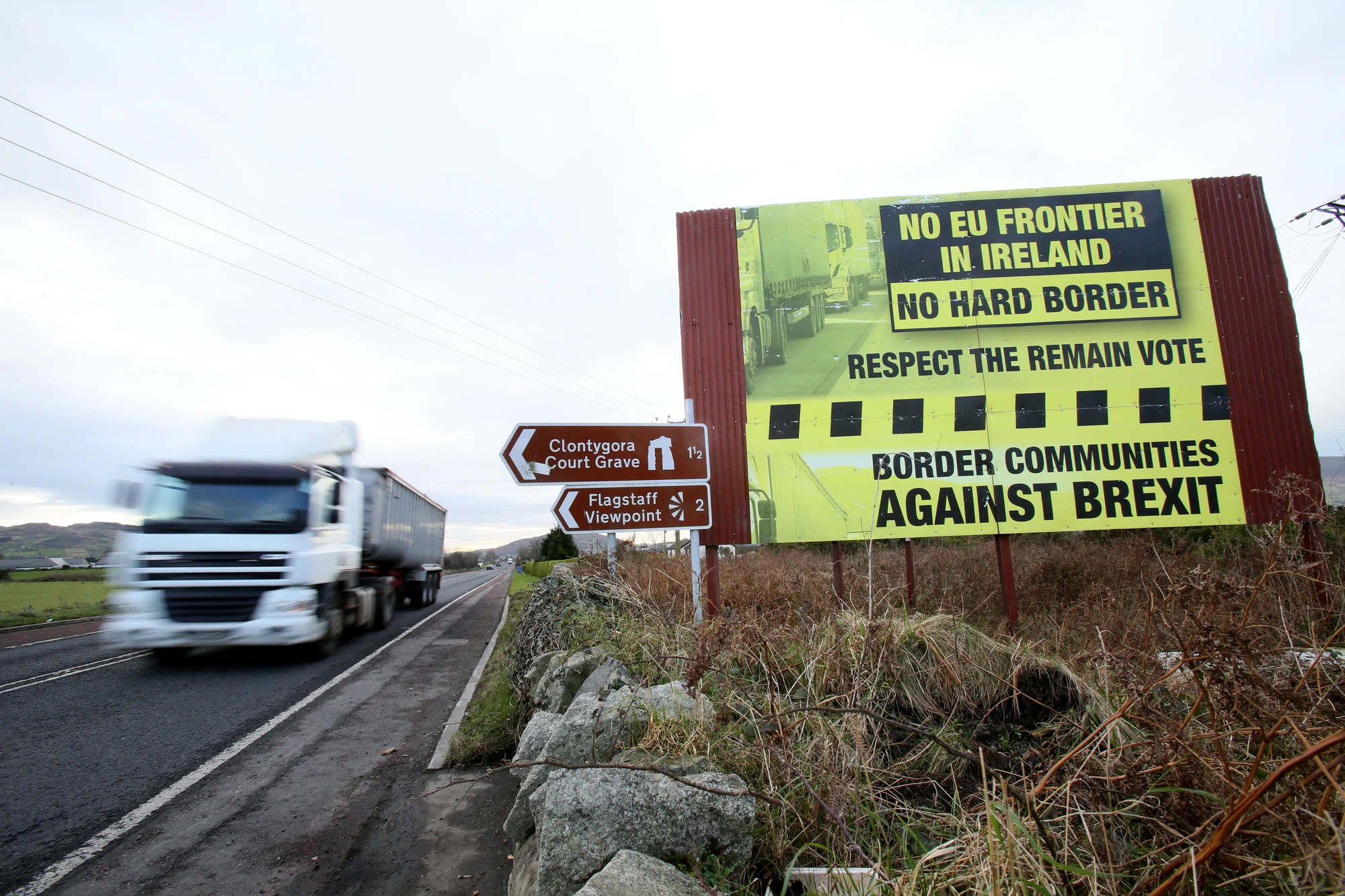
Though the media focus on the economic hurdles of a hard border, the bigger question of why the British still own any of Ireland in the first place remains.
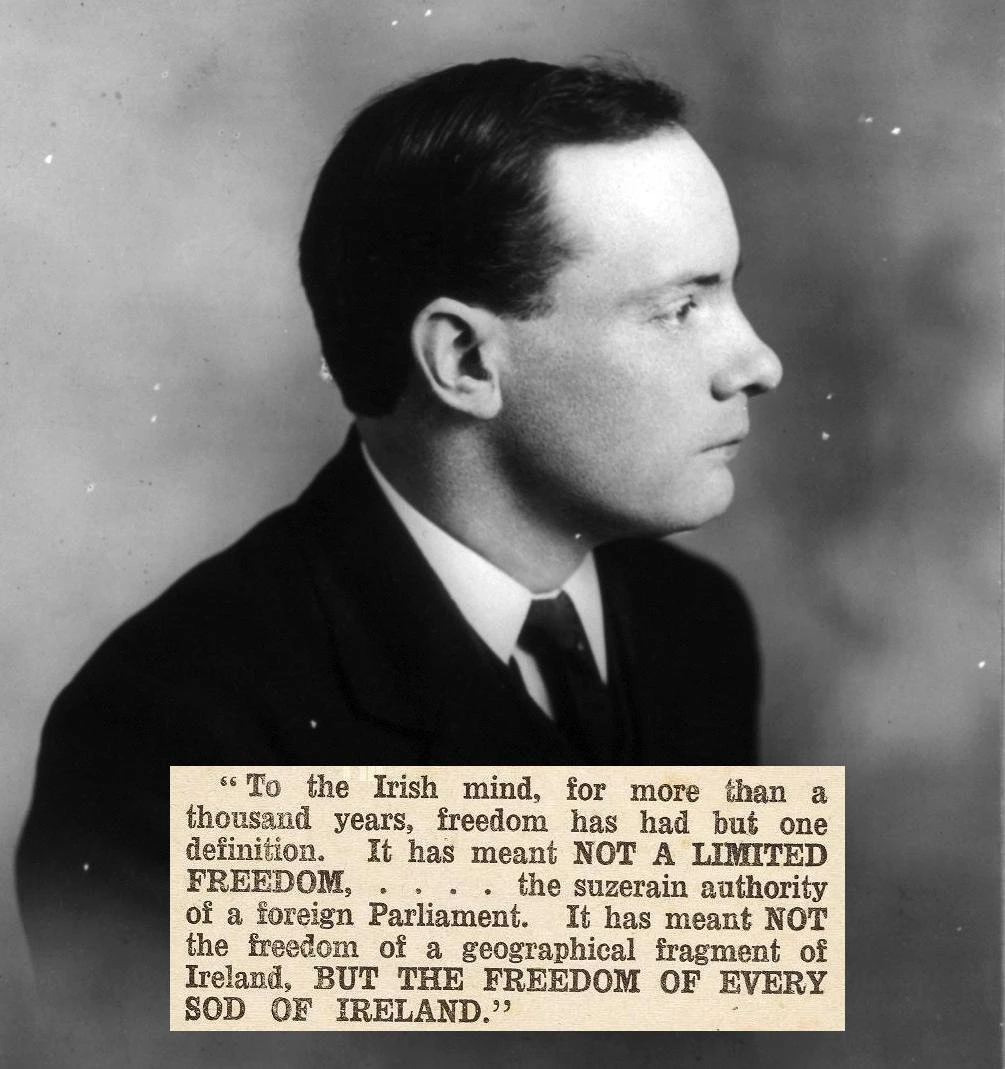
“Ireland her own, and all therein, from the sod to the sky. The soil of Ireland for the people of Ireland” – James Fintan Lalor
In the mid-1800s, roughly 1 million Irish people were starved and murdered by the British Empire over the course of the Great Famine. Contrary to popular belief, the Irish did not die by the hundreds of thousands due to the blighted potato crop. In truth, the British had plenty of food to sustain themselves and the Irish people through the five years of crop failure. The Brits simply chose not to and let close to 25% of the Irish population die.
Make no mistake about it: In British eyes, the Irish have always been nothing more than slaves. The only ‘special relationship’ the Irish ever had with the United Kingdom is 500 years of unwanted lords and kings. Even today, as the Brexit deadline looms large, the discussion about what to do with the northern border remains largely out of the hands and mouths of the Irish people.
As with almost all of modern Irish politics, the future of the island nation is being decided by the British Parliament, and in the halls of Brussels. Though the media focus squarely on the economic hurdles of a hard border, the bigger question of why the British still own any of Ireland in the first place remains.
This weekend, an Irish nationalist banner was unfurled on an overpass outside the Republic’s capital city of Dublin that read, “Ireland Belongs to the Irish.” For Ireland and her people, this message should prove little controversy. Yet some found the pro-Ireland sign to overstep the boundaries of safe and appropriate discourse.
Hopefully this ridiculous banner will be taken down.. its incendiary and deliberately put there to cause conflict. Ireland is for whoever wants to come here for a better life and earn their keep
— Jeremy Dixon (@JeremyDixonDJ) September 1, 2019
A message that promotes the natural freedom and liberty of Ireland is not ridiculous. What is ridiculous, however, is the continued occupation of any inch of Ireland by the political elites in Westminster. The same politicians who benefit from owning precious Irish homeland have the gall to paint pro-Irish freedom fighters as terrorists and gangsters, maintaining their physical and ideological dominance over the North through sustained manipulation of historical and economic pressure.
In Ireland, there is always a worry that The Troubles will return. Like whispering the name of Voldermort, the Irish people eagerly shy away from the memories of the four decades-long violence between Irish insurgents and the British military. It is precisely this sort of hush-hush attitude that keeps the real conversation – the one in which the Irish people get about rightfully reclaiming a significant part of their country that was taken by force – from happening.
Estimations suggest that 3,500 people died as a result of The Troubles. That’s 996,500 less than those that were left to starve by the British when the potato crop withered in the Fall of 1845. When we discuss The Troubles, shouldn’t we really be discussing the multi-century trouble that England and her imperialist armies have wrought on the people of Ireland?
In a think-piece published by The Guardian, Rory Carroll rolled out the usual criticism of Irish independence as being led by an operative gang of thugs and hooligans. Writing about a bomb that blew up in a parked car in Fermanagh last week, Carroll bled Union Jack: “It caused no casualties. But for security forces the shockwave was a stark reminder that they are engaged in a game of homicidal cat-and-mouse with an unseen foe.”
“Homicidal cat-and-mouse?” “Unseen foe?” This is the tone in which British pundits describe the men and women who still aim to unite their divided homeland. The Irish people deserve Ireland – all of Ireland. They are a people who have been systematically made broken through methods of starvation, murder, imprisonment, and mockery by the English government for the better part of 500 years.
It is not a ‘no-deal’ that threatens the peace in Ireland – it is the continued imposition of an invading army and people. There is not a more pressing or consequential moment to take back the six counties in the North than on the eve of Brexit. With the United Kingdom in parliamentary and economic freefall, the opportunity to deal a landmark blow onto Ireland’s imperialist neighbors has never been better.
Where are the Irish leaders to demand that if England wants to leave the EU, they might as well leave the whole North while they are at it?C h
“You can’t get out of the violent situation by wishful thinking and praying … You can only get out of it by understanding how you got into.” – Bernadette Devlin
Why is it English leaders who arm the pens when writing what will be done with what is still, to this day, occupied territory in the North? Belfast is one of the most economically viable seaports in all of Europe – and it is Ireland’s, not England’s. The city and the land surround it is Ireland’s and its people should have a right to claim ownership.
British politicians revealed this weekend that they will set up a “cross-border body to monitor and regulate trade across the Irish border.” Decades after the violence that dotted the border of Ireland and the British Empire, there still remains a watchful and paternal eye over the homeland of Ireland.
On Sunday, The Guardian published a visual model that shows how much traffic moves between the border of Ireland and the British Empire over the course of an hour. As you watch the blue and red dots ping between the artificial border, remember that there should be no such border to begin with. That the ‘border’ between which trucks, and livestock, and commodities are passing is a fictitious space wholly created, owned, and patrolled by foreign invaders.
Instead of Irish politicians condemning these attacks on the privacy and sovereignty of its citizens, they have chosen to look beyond their own borders and ask, meekly, for the security and help of the EU.