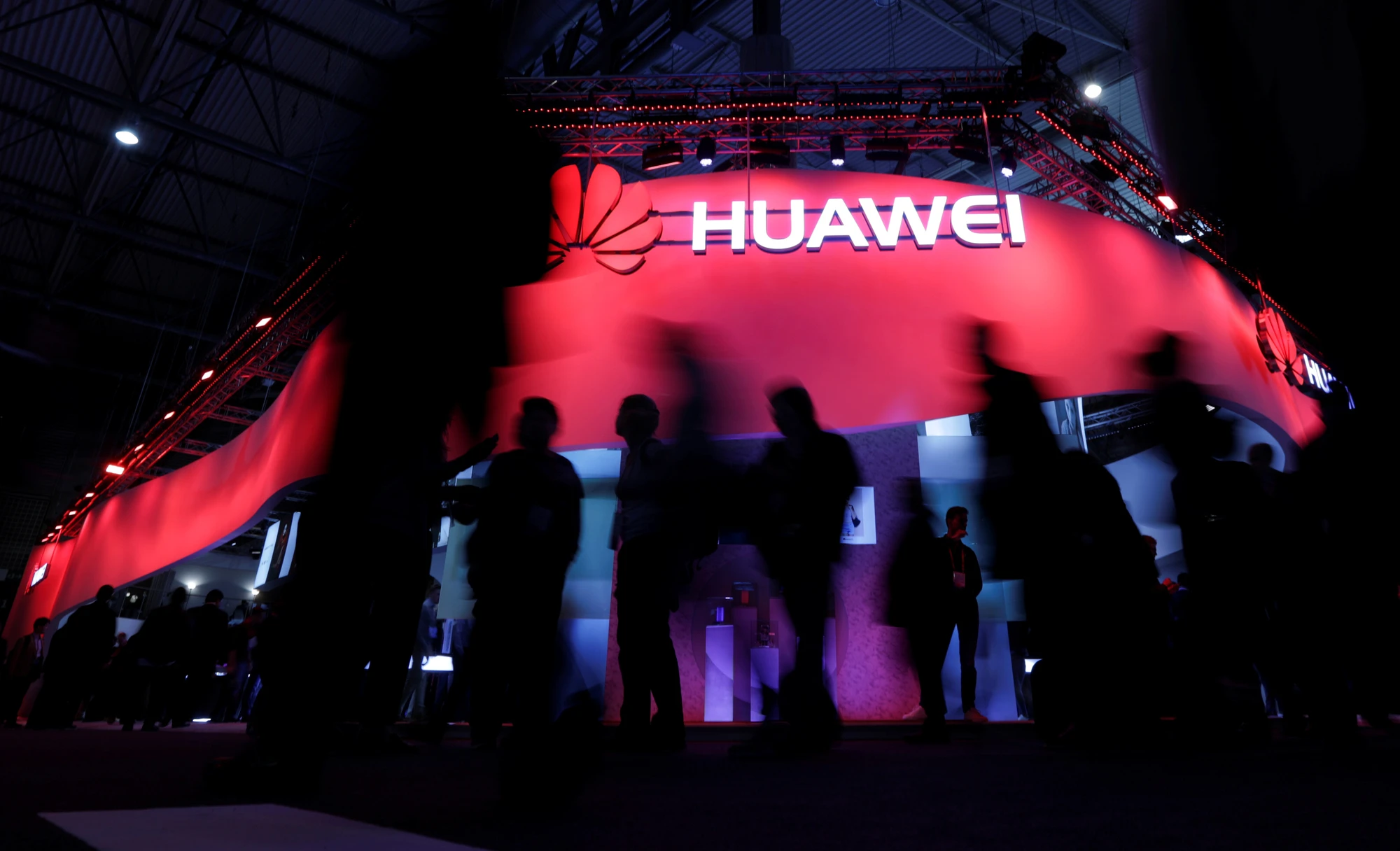
China wants to own the internet. If you’re reading this in the United States or Europe, China wants to own your internet specifically. Huwaei and ZTE, both Chinese government-adjacent power-pawns who report (in)directly to Beijing, have strategically contracted with nations around the globe in an attempt to build, organize, and fundamentally control the next generation of the internet. Through the “private” arm of these tech giants, China has bullied and bought its way into the ground wires of two-thirds of the global internet.
This is the same China that is ‘reeducating’ millions of Uighur Muslims in barbaric concentration camps, murdering Falun Gong members to harvest and sell their organs, and is embroiled in an ongoing civil rights fiasco in Hong Kong, where protesters have been shot and beaten.
China is a top-down ultra-nationalist state that has single-handedly brought the National Basketball Association of America to its proverbial knees over a single tweet, brazenly stolen intellectual property and patents with little regard for international law, and is currently using biometric data and artificial intelligence to racially profile ethnic minority communities.
With the future of data, privacy, and free speech at stake, can we really trust the Chinese government and its intertwined corporations?
China’s New World
The most alarming aspect of China’s numerous human rights abuses and defiant technological thievery is just how little they appear to care about what the rest of the world thinks. When the U.S. or European Union countries overstep political and cultural boundaries, they are met with scrutiny and often, demands for swift change from Western allies. If they refuse, the threat of economic exclusion looms large enough to strong-arm would-be dissent. When China does the same, or worse, the West frets about the political fallout that would result from threatening similar sanctions.
Soon enough, even the threat of economic punishment will do little to deter the budding empire. That’s because China has been pouring trillions into the most elaborate trade route constructed in modern history: the Belt And Road Initiative. Belt and Road aims to reestablish the ancient silk road trading system and diametrically alter the economic and technological infrastructure of modern global trade.
The nation is building ports in Pakistan, providing security arrangements in Serbia, creating islands on disputed reefs in the South China Sea, and has spent more than $60 billion on infrastructure projects throughout Africa with the hopes of creating political currency by way of brute cultural penmanship. What’s even more troubling is the fact that many nations doing business with China end up falling into massive debt to the superpower. What was once the dirty business of the World Bank and the IMF has gracefully fallen to the welcoming shoulders of Xi Jinping.
Replacing the multinational banking systems of the 21st century with a one-government solution is only one part of China’s larger plan to seize banking, trade, and commerce routes the world over.
5G Buildout
5G is an easy sell. It will undoubtedly revolutionize the speed of the internet making our connections faster, smarter, and more powerful. But the political and cultural implications of handing over the infrastructure buildout to the Chinese government, by way of Huwaei and ZTE, is a concern for anyone who values American constitutional rights.
Right now, countries across the globe (more than 25 in Europe alone) have signed deals with Huawei to prioritize 5G development. This is the same company whose CFO was arrested in Canada last year on charges of covering up illegal financial dealings with Iran. Huawei and the multinational Chinese company ZTE are not like private businesses in the West.
Both companies are subservient to the Chinese government and must turn over any data to party officials on request. The lack of separation between commerce and the state plays out in disturbing ways, such as when the government decided to ban the showing of NBA games after Houston Rockets General Manager Daryl Morey tweeted in support of Hong Kong.
One of the successes of President Trump’s first term has been a willingness to challenge the Chinese administration on trade and tech. For all of his faults, Trump has been sharper than every modern president on issues of big data, internet security, and the freedoms at risk in the medium of tech. In February, the president tweeted: “I want 5G, and even 6G, technology in the United States as soon as possible … There is no reason that we should be lagging behind … ”
I want 5G, and even 6G, technology in the United States as soon as possible. It is far more powerful, faster, and smarter than the current standard. American companies must step up their efforts, or get left behind. There is no reason that we should be lagging behind on………
— Donald J. Trump (@realDonaldTrump) February 21, 2019
For the stability and good of the American nation, U.S. companies must prioritize onboarding this powerful new tech. The U.S. has enough problems dealing debating the First Amendment in the digital age, but if America does not control its own internet, the current discussions about de-platforming and free speech will look like child’s play.
Last year, cybersecurity officials announced that China had ‘mistakenly’ diverted U.S. and Canadian internet traffic for more than two months. During this time, breaches in security and theft of intellectual property skyrocketed. Professors Yuval Shavitt and Chris Demchak raised their concerns in a published paper for Military Cyber Affairs that, in part, read, “China Telecom has ten strategically placed, Chinese-controlled internet ‘points of presence’ (PoPs) across the internet backbone of North America. Vast rewards can be reaped from the hijacking, diverting, and then copying of information-rich traffic going into or crossing the United States and Canada – often unnoticed and then delivered with only small delays.”
Speaking of Speech
Sadly, many American companies have completely flopped on the China issue. In effect, they helped squash any reputable objections to the nation’s draconian rule. This week, several NBA players refused to answer questions surrounding the Hong Kong protests and Lebron James, well known for his defense of social justice in America, took China’s side when he suggested that Houston Rockets General Manager Daryl Morey ‘wasn’t educated on the situation at hand.’ This led to immediate backlash from protesters in Hong Kong, who burned his jersey in the streets.
What James’ response says about American enterprise and its apathy toward our rights is terrifying. Have Americans become so tone-deaf to the history of American values that our liberties no longer apply?
James perfectly embodies what has become a general distaste for America and the principles that have guided it through feast and famine. A Pew Research Center poll found that a majority of young Americans see each other as exploitative, selfish, and untrustworthy. The same poll showed that millennials and Gen-Z prefer governments that provide free health care, college, and an assortment of other entitlement programs. It is no wonder, then, that they feel comfortable with the government and corporate regulation of speech, too.
In many ways, it is not China that is the greatest threat to American freedom and secular democracy—it is Americans themselves. The issue of China and the suppression of speech was hardly mentioned at the latest round of Democratic debates. Meanwhile, China and its corporate arms continue to build bridges and sign contracts to create the new internet. What happens to the rights of mankind when a totalitarian state like China controls the levies of communication?
Yes, we all want the fastest internet possible. No, it’s not worth speeding up routers if it means sacrificing the fundamental American freedoms that have preserved our institutions through times of great rebellion and decay. The sooner we stop squabbling about identity politics and sort through the looming existential crisis that is China, the better.